






新闻中心 
CPM-Distill:经过知识蒸馏的小型文本生成模型
 2025-07-18
 浏览次数:次
 返回列表
返回列表本文介绍知识蒸馏技术及基于PaddleNLP加载CPM-Distill模型实现文本生成。知识蒸馏是模型压缩方法,以“教师-学生网络”思想,让简单模型拟合复杂模型输出,效果优于从头训练。CPM-Distill由GPT-2 Large蒸馏得到,文中还给出安装依赖、加载模型、解码方法及文本生成示例。
☞☞☞AI 智能聊天, 问答助手, AI 智能搜索, 免费无限量使用 DeepSeek R1 模型☜☜☜
引入
- 近些年来,随着 Bert 这样的大规模预训练模型的问世,NLP 领域的模型也逐渐变得越来越大了
- 受限于算力水平,如此大规模的模型要应用在实际的部署场景都是不太实际的
- 因此需要通过一些方式对大规模的模型进行压缩,使其能够在部署场景下达到一个相对可用的速度
- 常见的模型压缩方法有:剪枝、量化、知识蒸馏等
- 最近 CPM(Chinese Pre-Trained Models)项目又开源了一个使用知识蒸馏得到的小型文本生成模型 CPM-Distill
- 本次项目就简单介绍一下知识蒸馏技术并且通过 PaddleNLP 套件加载 CPM-Distill 模型实现文本生成
相关项目
- Paddle2.0:构建一个经典的文本生成模型GPT-2
- 文本生成:使用GPT-2加载CPM-LM模型实现简单的问答机器人
- 文本生成:让AI帮你写文章吧
- 【AI创造营】PaddleHub 配合 PaddleNLP 实现简单的文本生成
相关资料
- 论文:
- CPM: A Large-scale Generative Chinese Pre-trained Language Model
- Distilling the Knowledge in a Neural Network
- 官方实现:TsinghuaAI/CPM-Distill
模型压缩技术
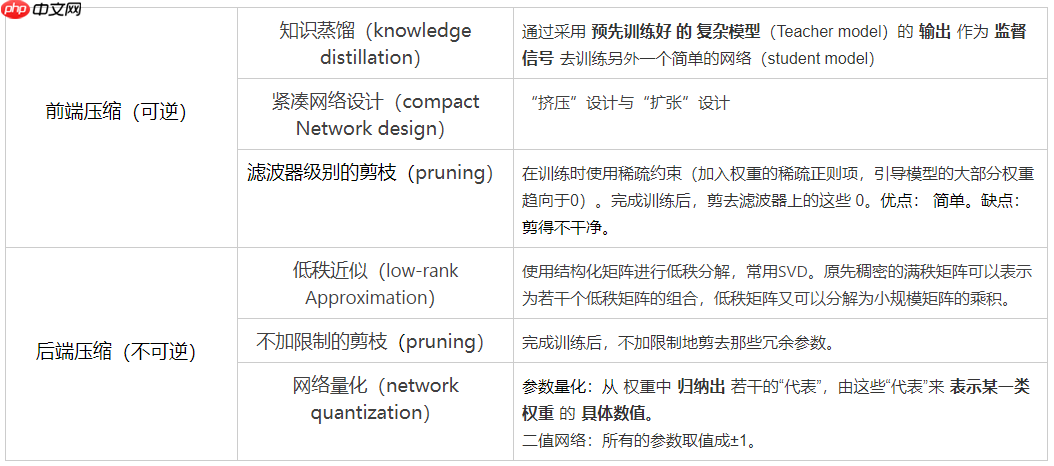
知识蒸馏(Knowledge Distillation)
知识蒸馏是一种模型压缩方法,是一种基于“教师-学生网络思想”的训练方法。
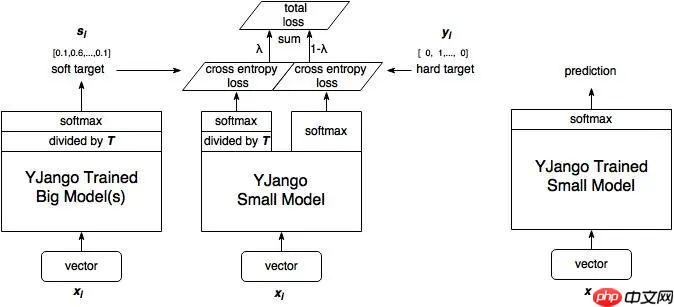
由 Hinton 在 2015 年 Distilling the Knowledge in a Neural Network 的论文首次提出了知识蒸馏的并尝试在 CV 领域中使用,旨在把大模型学到的知识灌输到小模型中,以达到缩小模型的目标,示意图如下:
 m*en使用方法 中文WORD版
本文档主要讲述的是m*en使用方法;M*en是基于项目对象模型的(pom),可以通过一小段描述信息来管理项目的构建,报告和文档的软件项目管理工具。M*en将你的注意力从昨夜基层转移到项目管理层。M*en项目已经能够知道 如何构建和捆绑代码,运行测试,生成文档并宿主项目网页。希望本文档会给有需要的朋友带来帮助;感兴趣的朋友可以过来看看

 0
查看详情
0
查看详情

- 说人话就是指用一个简单模型去拟合复杂模型的输出,这个输出也叫做“软标签”,当然也可以加入真实数据作为“硬标签”一同训练。
- 使用知识蒸馏技术相比直接从头训练的效果一般会更好一些,因为教师模型能够指导学生模型收敛到一个更佳的位置。
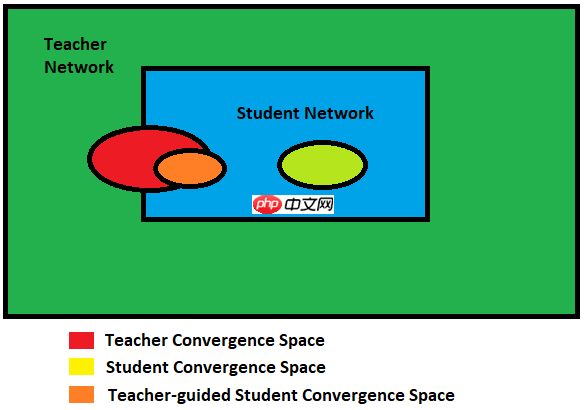
- 知识蒸馏技术除了可以用来将网络从大网络转化成一个小网络,并保留接近于大网络的性能;
- 也可以将多个网络的学到的知识转移到一个网络中,使得单个网络的性能接近 emsemble 的结果。
蒸馏模型信息
- 教师模型为 GPT-2 Large,具体的模型参数如下:
teacher_model = GPTModel(
    vocab_size=30000,
    hidden_size=2560,
    num_hidden_layers=32,
    num_attention_heads=32,
    intermediate_size=10240,
    hidden_act="gelu",
    hidden_dropout_prob=0.1,
    attention_probs_dropout_prob=0.1,
    max_position_embeddings=1024,
    type_vocab_size=1,
    initializer_range=0.02,
    pad_token_id=0,
topo=None)- 学生模型为 GPT-2 Small,具体的模型参数如下:
teacher_model = GPTModel(
    vocab_size=30000,
    hidden_size=768,
    num_hidden_layers=12,
    num_attention_heads=12,
    intermediate_size=3072,
    hidden_act="gelu",
    hidden_dropout_prob=0.1,
    attention_probs_dropout_prob=0.1,
    max_position_embeddings=1024,
    type_vocab_size=1,
    initializer_range=0.02,
    pad_token_id=0,
    topo=None)
蒸馏 loss
- 将大模型和小模型每个位置上输出之间的 KL 散度作为蒸馏 loss,同时加上原来的 language model loss。总 loss 如下:
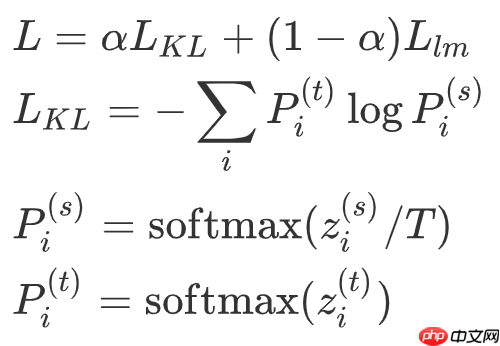
其中 Llm 为 GPT-2 原始的 language modeling loss。
安装依赖
In [ ]!pip install paddlenlp==2.0.1 sentencepiece==0.1.92
加载模型
In [1]import paddlefrom paddlenlp.transformers import GPTModel, GPTForPretraining, GPTChineseTokenizer# tokenizer 与 CPM-LM 模型一致tokenizer = GPTChineseTokenizer.from_pretrained('gpt-cpm-large-cn')# 实例化 GPT2-small 模型gpt = GPTModel(
vocab_size=30000,
hidden_size=768,
num_hidden_layers=12,
num_attention_heads=12,
intermediate_size=3072,
hidden_act="gelu",
hidden_dropout_prob=0.1,
attention_probs_dropout_prob=0.1,
max_position_embeddings=1024,
type_vocab_size=1,
initializer_range=0.02,
pad_token_id=0,
topo=None)# 加载预训练模型参数params = paddle.load('data/data92160/gpt-cpm-small-cn-distill.pdparams')# 设置参数gpt.set_dict(params)# 使用 GPTForPretraining 向模型中添加输出层model = GPTForPretraining(gpt)# 将模型设置为评估模式model.eval()[2025-05-28 19:38:04,469] [ INFO] - Found /home/aistudio/.paddlenlp/models/gpt-cpm-large-cn/gpt-cpm-cn-sentencepiece.model
模型解码
In [40]import paddleimport numpy as np# Greedy Searchdef greedy_search(text, max_len=32, end_word=None):
# # 终止标志
if end_word is not None:
stop_id = tokenizer.encode(end_word)['input_ids']
length = len(stop_id) else:
stop_id = [tokenizer.eod_token_id]
length = len(stop_id)
# 初始预测
ids = tokenizer.encode(text)['input_ids']
input_id = paddle.to_tensor(np.array(ids).reshape(1, -1).astype('int64'))
output, cached_kvs = model(input_id, use_cache=True)
next_token = int(np.argmax(output[0, -1].numpy()))
ids.append(next_token) # 使用缓存进行继续预测
for i in range(max_len-1):
input_id = paddle.to_tensor(np.array([next_token]).reshape(1, -1).astype('int64'))
output, cached_kvs = model(input_id, use_cache=True, cache=cached_kvs)
next_token = int(np.argmax(output[0, -1].numpy()))
ids.append(next_token) # 根据终止标志停止预测
if ids[-length:]==stop_id: if end_word is None:
ids = ids[:-1] break
return tokenizer.convert_ids_to_string(ids)
In [39]
import paddleimport numpy as np# top_k and top_p filteringdef top_k_top_p_filtering(logits, top_k=0, top_p=1.0, filter_value=-float('Inf')):
    """ Filter a distribution of logits using top-k and/or nucleus (top-p) filtering
        Args:
            logits: logits distribution shape (vocabulary size)
            top_k > 0: keep only top k tokens with highest probability (top-k filtering).
            top_p > 0.0: keep the top tokens with cumulative probability >= top_p (nucleus filtering).
                Nucleus filtering is described in Holtzman et al. (http://arxiv.org/abs/1904.09751)
        From: https://gist.github.com/thomwolf/1a5a29f6962089e871b94cbd09daf317
    """
    top_k = min(top_k, logits.shape[-1])  # Safety check
    logits_np = logits.numpy()    if top_k > 0:        # Remove all tokens with a probability less than the last token of the top-k
        indices_to_remove = logits_np < np.sort(logits_np)[-top_k]
        logits_np[indices_to_remove] = filter_value    if top_p < 1.0:
        sorted_logits = paddle.sort(logits, descending=True)
        sorted_indices = paddle.argsort(logits, descending=True).numpy()
        cumulative_probs = paddle.cumsum(paddle.nn.functional.softmax(sorted_logits, axis=-1), axis=-1).numpy()        # Remove tokens with cumulative probability above the threshold
        sorted_indices_to_remove = cumulative_probs > top_p        # Shift the indices to the right to keep also the first token above the threshold
        sorted_indices_to_remove[..., 1:] = sorted_indices_to_remove[..., :-1]
        sorted_indices_to_remove[..., 0] = 0

        indices_to_remove = sorted_indices[sorted_indices_to_remove]
        logits_np[indices_to_remove] = filter_value    return paddle.to_tensor(logits_np)# Nucleus Sampledef nucleus_sample(text, max_len=32, end_word=None, repitition_penalty=1.0, temperature=1.0, top_k=0, top_p=1.0):
    # 终止标志
    if end_word is not None:
        stop_id = tokenizer.encode(end_word)['input_ids']
        length = len(stop_id)    else:
        stop_id = [tokenizer.eod_token_id]
        length = len(stop_id)    # 初始预测
    ids = tokenizer.encode(text)['input_ids']
    input_id = paddle.to_tensor(np.array(ids).reshape(1, -1).astype('int64'))
    output, cached_kvs = model(input_id, use_cache=True)
    next_token_logits = output[0, -1, :]    for id in set(ids):
        next_token_logits[id] /= repitition_penalty
    next_token_logits = next_token_logits / temperature
    filtered_logits = top_k_top_p_filtering(next_token_logits, top_k=top_k, top_p=top_p)
    next_token = paddle.multinomial(paddle.nn.functional.softmax(filtered_logits, axis=-1), num_samples=1).numpy()
    ids += [int(next_token)]    # 使用缓存进行继续预测
    for i in range(max_len-1):
        input_id = paddle.to_tensor(np.array([next_token]).reshape(1, -1).astype('int64'))
        output, cached_kvs = model(input_id, use_cache=True, cache=cached_kvs)
        next_token_logits = output[0, -1, :]        for id in set(ids):
            next_token_logits[id] /= repitition_penalty
        next_token_logits = next_token_logits / temperature
        filtered_logits = top_k_top_p_filtering(next_token_logits, top_k=top_k, top_p=top_p)
        next_token = paddle.multinomial(paddle.nn.functional.softmax(filtered_logits, axis=-1), num_samples=1).numpy()
        ids += [int(next_token)]        # 根据终止标志停止预测
        if ids[-length:]==stop_id:            if end_word is None:
               ids = ids[:-1]            break

    return tokenizer.convert_ids_to_string(ids)
文本生成
In [41]# 输入文本inputs = input('请输入文本:')print(inputs)# 使用 Nucleus Sample 进行文本生成outputs = greedy_search(
inputs, # 输入文本
max_len=128, # 最大生成文本的长度
end_word=None)# 打印输出print(outputs)请输入文本:请在此处输入你的姓名 请在此处输入你的姓名,然后点击“确定”,就可以开始游戏了。 游戏目标:在限定时间内,成功地把所有的牌都通通打完。In [43]
# 输入文本inputs = input('请输入文本:')print(inputs)for x in range(5):    # 使用 Nucleus Sample 进行文本生成
    outputs = nucleus_sample(
        inputs, # 输入文本
        max_len=128, # 最大生成文本的长度
        end_word='。', # 终止符号
        repitition_penalty=1.0, # 重复度抑制
        temperature=1.0, # 温度
        top_k=3000, # 取前k个最大输出再进行采样
        top_p=0.9 # 抑制概率低于top_p的输出再进行采样
    )    # 打印输出
    print(outputs)
请输入文本:请在此处输入你的姓名 请在此处输入你的姓名、学校、专业及学科,并在社交媒体上公布你的个人简介。 请在此处输入你的姓名或者电话,对方会及时通知你。 请在此处输入你的姓名、民族及籍贯信息,当您找到 CADULI 的联系方式后,我们会按您所选择的申请中心,以电子邮件的形式向您发送邮件。 请在此处输入你的姓名和电话号码,由资深*接待员进行介绍,因为此处有不少中国的大老板,英文能看。 请在此处输入你的姓名、联系电话、银行卡号和手机号。
以上就是CPM-Distill:经过知识蒸馏的小型文本生成模型的详细内容,更多请关注其它相关文章!
# 一键
# 沧州南皮公司网站建设
# 走秀推广视频素材网站
# 高仿网站怎么推广的呢
# 市场卖猪肉推广如何营销
# 网站托管优化怎么做
# 山东的网站建设运营
# 贵州广电网站优化大全
# 滦县网站优化推荐
# 养殖场推广网站哪个好用
# 威海建设网站报价
# 安装包
# 的是
# git
# 是一种
# 文档
# 加载
# 请输入
# 中文网
# 请在
# type
# udio
# red
# 压缩技术
# ai
# cad
相关栏目:
【
行业资讯67740 】
【
技术百科0 】
【
网络运营39195 】
相关推荐:
位置控制单片机怎么用的
自己如何安装固态硬盘
linux如何调出命令行
typescript如何遍历map
征信信用不好如何恢复 征信信用不好如何恢复指南
台达变频器power灯是什么意思
为什么夸克运行不了
焊机上power灯闪是什么意思
春运提前抢票攻略
学typescript需要什么基础么
单片机怎么连接电路图
如何通过命令行启动tomcat
商誉是什么意思
旧固态硬盘如何卖出
typescript 如何使用
solo交友软件怎么恢复聊天记录
如何用dos命令分区
typescript怎么解析vue TypeScript在vue中的使用最新解读
苹果16关闭哪些功能好
怎么把手机里爱奇艺的视频下载到u盘里
如何弄坏固态硬盘
市盈率3.2是什么意思
5r是多少钱
j*a数组怎么取元素
单片机引脚怎么改成上拉
命令行如何打开文件
安全的ao3镜像网站链接入口
j*a怎么用json数组
怎么在typescript定义集合
win7怎么装扫描仪
市盈率中1stdv是什么意思
win10锁屏壁纸怎么换360锁屏壁纸吗
typescript干什么的
j*a数组怎么保存类
65寸电视长宽多少厘米
youtube受限模式是什么_youtube受限模式是什么意思
苹果16系统多了哪些
soup是什么意思
夸克po什么意思
折叠屏手机选择哪个好
单片机学习视频怎么调色
命令控制台如何执行sql文件
三星 nfc什么功能是什么意思
固态硬盘如何接主机
ssd固态硬盘如何选择
j*a怎么用数组缓存
苹果16有哪些黑科技
power在录音笔上是什么意思
显示器上power键是什么意思
油烟机上的power是什么意思
